


Miner Tycoon : Big Dynamite
3.9455.00 Reviews
App Specs
- Version
- 2.0.3
- Updated On
- License
- Free
- Downloads
- 1,000,000+
- Developer
- BREW GAMES
- Categories
- Arcade
- Platform
- Android
Screenshots
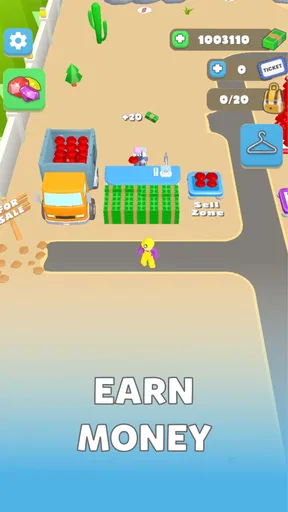
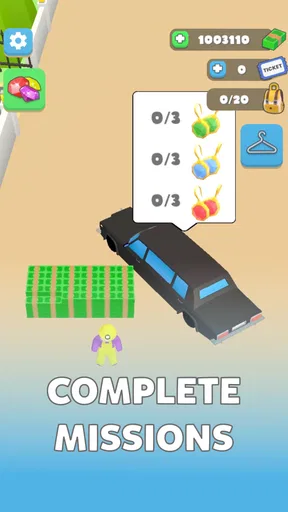
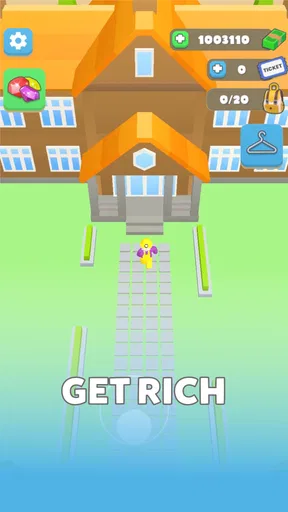
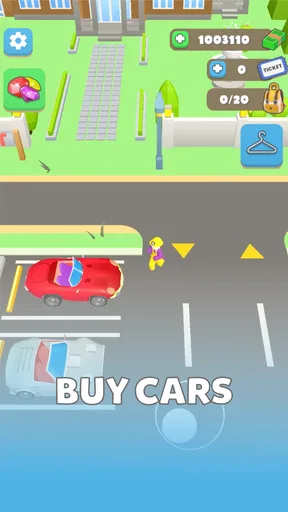
 Analysis by AppCompare
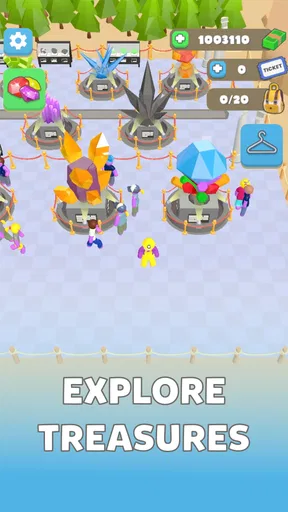
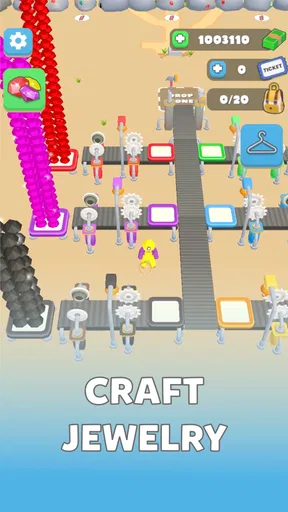
Miner Tycoon: Big Dynamite is the kind of arcade game I open when I want a quick, uncomplicated distraction with a clear loop: break things, gather what comes out, turn the haul into money, and use that progress to keep going. It comes from BREW GAMES and takes the familiar idle-mining idea into a more active, explosive format. The appeal is easy to understand, but the important question is whether that loop stays enjoyable after the first few sessions.
My answer is that it works best for players who like visible progress without having to learn a complicated system. It is free to start, rated Teen, and available for devices running Android 10 or later. The game has passed over a million installs and holds a 3.9 average from roughly sixteen thousand ratings, which suggests a broad audience but also a fairly mixed experience. I can see why: the early minutes are immediately readable, while the longer-term value depends on how much repetition and monetization a player is willing to accept.
How to decide if this mining arcade game suits you
I use this section to weigh whether the game’s mining-and-upgrade loop can become a comfortable habit rather than a novelty I quickly outgrow. The useful test is to notice which parts still feel satisfying after a few returns: the blast itself, collecting the payoff, or choosing how to reinvest it. That distinction makes it easier to decide what kind of lasting value to expect.
The central loop is simple, but not empty
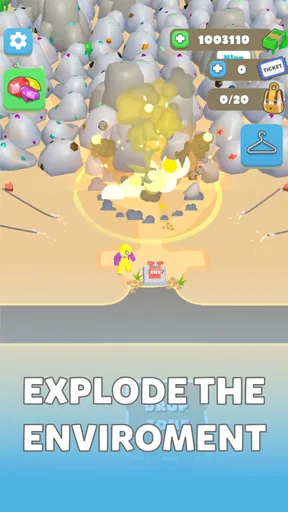
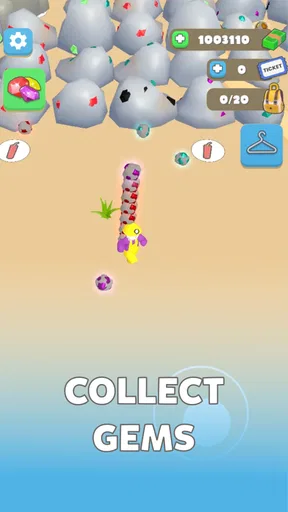
The first thing I look for in an arcade game is whether I understand the objective without stopping to study instructions. Here, the basic rhythm is direct. I detonate obstacles, collect the resulting materials, sell them, and use the earnings to improve my position. That sequence gives every short session a beginning, a small task, and a visible payoff.
That simplicity is a strength rather than a weakness when I am playing between other activities. I do not need to remember a large map, manage a long quest log, or follow a story with complicated characters. The game communicates through action and reward. Each blast feels useful because it is tied to collection and income instead of being destruction for its own sake.
At the same time, this is not the right choice if I want a deep mining simulation. The title uses mining as an arcade framework, not as a detailed economic or geological model. I would not choose it for carefully planning production chains, studying complex resource markets, or building a large settlement with many interacting systems. Its pleasure comes from momentum, not from elaborate strategy.
What I would examine before committing time
My first decision criterion is tolerance for repetition. The game is built around repeating a satisfying action and watching the result become currency. If that kind of loop relaxes you, the structure is easy to enjoy. If you need every stage to introduce a radically different rule, the same pattern may begin to feel predictable.
Worth Reading Before You Choose

EA SPORTS FC Mobile 26 Is a Bigger Football Game, but It Takes Time

Flipboard Shows What News Apps Must Do Beyond the Feed

Switching to Android Auto Means Rethinking Your Driving Routine

Google Calendar Makes a Crowded Week Easier to Manage

Ludo King Makes the Most of the Minutes Between Plans

Baby Panda World Brings Quick Play to Modern Phones, but Its Game Library Feels Busy
The second criterion is how much control I want. Arcade mining gives me more immediate involvement than a completely passive tycoon game, because I am participating in the detonation and collection process. Still, it does not become a precision action game simply because explosions are involved. I would describe the control as accessible and task-focused rather than demanding.
The third is patience with progression. A tycoon game usually asks me to repeat profitable actions so that later actions become more rewarding. That can be motivating when the next improvement feels close. It can also make a session feel like work when progress slows or when the game presents paid options at exactly the moment I want to move faster.
Finally, I consider whether I am comfortable with optional spending. The game is free to download, but its in-app purchases range from $1.99 to $199.99 per item. That is a wide enough range that I would approach the economy carefully. I can start without paying, yet I would not assume that every acceleration or convenience is equally good value.
A practical way to play during a normal day
Imagine I have ten minutes before leaving home. This is where the game makes the most sense for me. I can enter, focus on a compact objective, collect the results, and leave after a short burst without needing a long uninterrupted session. The visual idea of blasting through material also gives the session a stronger sense of activity than simply watching numbers rise.
On a longer evening, I would use a different approach. Rather than spending every reward immediately, I would first identify which improvement makes the next collection cycle easier or more profitable. That small habit matters in a game based on repeated earnings. Buying whatever appears first can produce a short thrill but leave me with less flexibility when the next obstacle requires a different kind of investment.
I would also treat each play session as a series of small tests. Does a stronger upgrade noticeably reduce the effort of collecting? Does a new area make the loop feel fresher, or merely add more of the same? Are paid offers helping me solve a real annoyance or only encouraging an impulse purchase? Asking those questions keeps the game from quietly turning a casual break into an unplanned spending session.
Where the game wins over slower tycoon alternatives
The strongest advantage is immediacy. Traditional tycoon games often begin with menus, timers, buildings, staff, and several layers of management. That can be rewarding, but it creates a higher entry cost. This game puts the satisfying action closer to the front: I trigger the explosive part, gather the outcome, and see the financial result.
That makes it a better fit than a menu-heavy management game when I want to feel involved rather than simply collect offline income. It also suits players who enjoy the fantasy of making a mess and turning that mess into profit. The explosive presentation gives the basic economy a physical action, even though the long-term loop remains straightforward.
Another advantage is clarity. Because the main activity is easy to identify, I spend less time wondering what the game expects from me. For a younger teen or an adult who wants a low-friction arcade experience, that clarity can be more valuable than a large number of systems. The Teen content rating is worth keeping in mind for families, but the rating itself does not make the game a complex or mature management title.
Three habits that make the progression feel better
My first tip is to separate earning from spending. After a profitable run, I would pause before buying the most visible upgrade. I would compare the improvement with the action I repeat most often. An upgrade that helps the main bottleneck is usually more useful than one that looks impressive but does not change the rhythm of a normal run.
Second, I would use short sessions to judge value rather than relying on the excitement of a new unlock. New content can make a game feel fresh for a few minutes, but the better test is whether the next several cycles remain comfortable. If the game still feels pleasant after the novelty fades, the progression is doing real work.
Third, I would decide on a spending boundary before opening the purchase screen. Because individual items can reach a high price, setting a personal limit in advance is more sensible than making the decision while chasing a faster upgrade. The free entry point lets me test the core loop first, so there is little reason to pay before I know whether I enjoy repeating it.
Where a different arcade game may fit better
I would choose another arcade game if I wanted reflexes, timing, or score chasing to be the main challenge. This title is about building resources through explosive mining and turning those resources into progress. It is not the best match for someone who wants tight one-minute rounds where personal skill matters more than accumulated upgrades.
I would also look elsewhere if I wanted a strong narrative reason to continue. The appeal here is economic momentum and the physical satisfaction of detonating material. Players who need characters, dialogue, exploration, or a story with meaningful turns may find the loop too functional.
Compared with a conventional idle tycoon, this game is more hands-on at the point of collection. Compared with a pure action arcade title, it is more patient and progression-driven. That middle position is useful, but it also means it may disappoint players at either extreme. It does not offer the deepest management, and it does not appear designed around demanding arcade mastery.
Monetization changes the decision
The free price makes trying the game easy, and I appreciate being able to judge the basic experience before spending anything. However, free entry does not automatically mean the economy will feel comfortable for every player. The purchase range is substantial, so I would pay attention to whether I am buying because I genuinely want extra convenience or because the ordinary pace has started to feel deliberately slow.
My preferred approach would be to play several sessions without purchasing, learn which part of the loop I enjoy, and then decide whether a paid item improves that specific part. If the main pleasure is the blast-and-collect action, I would not spend money simply to skip the activity that brought me to the game. If the repeated collection becomes tedious, paying to bypass it may remove the very interaction that makes this title distinct from a passive tycoon.
This is also where alternatives can be better. A completely free arcade game with no tycoon economy may offer a cleaner short-session experience, while a premium management game may provide a more predictable long-term structure. I would not claim either is universally superior. The right option depends on whether I value explosive interaction, detailed planning, or a purchase model with fewer decisions.
Device and audience considerations
The minimum operating system is Android 10, so I would check compatibility before recommending it to someone using an older phone. For a current device, the more important practical question is whether the player enjoys repeated visual action and resource collection. The game is not something I would hand to a child without checking the Teen rating and the purchase settings first.
For a teenager or adult who likes casual progression, the concept is easy to explain and easy to revisit. For a player who becomes frustrated by repeated tasks, the same accessibility may become a limitation. I would especially avoid recommending it to someone who wants a single, carefully finished campaign rather than an ongoing loop built around earning and upgrading.
What the current version tells me as a buyer
The current version is 2.0.3, and the game was released on November 8, 2022. Those details matter less than how the present build feels in use, but they give the title some history beyond a brand-new launch. I would still judge it by its current pacing, interface, and purchase prompts rather than assuming that a version number guarantees a particular level of polish.
The rating of 3.9 from roughly sixteen thousand ratings is a useful signal to keep expectations balanced. It is not a warning to avoid the game, but it is also not a reason to assume universal satisfaction. I read that kind of score as an invitation to try the free experience personally, especially because enjoyment of a repetitive arcade loop is highly individual.
My recommendation for different kinds of players
I recommend it to someone who wants a free arcade game with a clear money-making loop, enjoys explosive actions, and likes seeing small improvements accumulate. It is particularly suitable for short breaks, casual play, and players who find satisfaction in turning a simple repeated action into a larger result.
I would recommend skipping it if you dislike repeated collection, want deep tycoon planning, or prefer skill-based arcade rounds with little persistent progression. I would also be cautious if you are easily tempted by large in-app purchase options. In that case, a simpler alternative with fewer economic pressures may be a better everyday companion.
My final view is favorable but measured. The game knows what it wants to be: a straightforward mining arcade experience where destruction feeds a tycoon-style climb. That focus is its main strength. I can start quickly, understand the goal, and enjoy a satisfying burst without learning a complicated system.
The best reason to try it is the combination of active blasting and visible financial progress. The best reason to stop is that the same loop can become repetitive, especially if I expect deeper strategy or constant novelty. Since the download costs nothing, I think it is worth testing during a few short sessions. I would keep playing if the upgrades continue to make the action feel better, and I would move on without guilt if the economy starts feeling more demanding than entertaining.
In short, BREW GAMES has made a focused casual game rather than an all-purpose tycoon. I would choose it for quick, tactile progress, not for simulation depth. With sensible spending limits and realistic expectations, it can be a pleasant arcade diversion; without those limits, its broad purchase range may make the free starting point less comfortable than it first appears.
Pros
- Simple controls make it easy to start playing immediately.
- Idle earnings let you progress even when the app is closed.
- Frequent upgrades create a satisfying sense of improvement.
- Short play sessions suit quick breaks throughout the day.
- Bright visuals and playful effects give the game a cheerful style.
Cons
- Progress can feel slow without watching ads or spending currency.
- The gameplay loop becomes repetitive after extended sessions.
- Many upgrades require waiting
- encouraging frequent check-ins.
- Offline rewards may feel limited compared with active play.
- Ads can interrupt the experience and reduce the relaxed pace.
FAQs for Miner Tycoon : Big Dynamite
What is Miner Tycoon: Big Dynamite?
Miner Tycoon: Big Dynamite is an idle mining and management game in which you build and expand a mining operation. You collect resources, upgrade equipment, hire or improve workers, and increase production over time. The game is designed for short sessions as well as longer progress-focused play, with automated earnings continuing while you are away.
How does progression work in Miner Tycoon: Big Dynamite?
Progress is based on reinvesting the resources and money earned from your mines. You can generally improve extraction speed, storage capacity, worker performance, and other parts of the operation to increase income. As production grows, new areas or features may become available, giving the game a steady upgrade loop rather than requiring constant manual mining.
Can Miner Tycoon: Big Dynamite be played offline?
The game may allow some mining and management actions to continue without a permanent internet connection, but certain features can depend on online access. Advertising rewards, purchases, cloud synchronization, updates, and other connected services may require the internet. For the most reliable experience, launch the game online occasionally and check its current store description for offline limitations.
Is Miner Tycoon: Big Dynamite free to download and play?
Miner Tycoon: Big Dynamite is generally offered as a free-to-download game, allowing players to begin building their mining business without paying upfront. However, free games of this type commonly include optional in-app purchases and advertisements. These may provide bonuses, speed up upgrades, or remove waiting, but spending money is not necessarily required to experience the main progression.
Is Miner Tycoon: Big Dynamite suitable for children?
The game is relatively easy to understand because its main activities involve collecting resources, upgrading a mine, and watching production increase. Nevertheless, parents should review the age rating and privacy information before installation, especially because the game may contain advertisements, optional purchases, and online features. Device purchase controls are recommended if children will play without supervision.


